Research

I work on correlated wavefunction theories within Density Functional Embedding Theory (DFET), with applications to quantum defects, heterogeneous catalysis, and water and solvation. I also develop and apply stochastic and mixed stochastic-deterministic density functional theory to study electronic structure and transport in warm dense matter and hot dense plasmas.

Research areas

Quantum information science · Ongoing research direction

Quantum defects

I am investigating how a defect’s local electronic structure and crystalline environment shape its excited states and optical response. This ongoing direction applies embedded correlated wavefunction methods to point defects in diamond-based qubits.

Quantum embedding

DFET places a region of interest within an environment described by density functional theory. A correlated wavefunction treatment of that region can then resolve local electronic structure at greater accuracy. This approach connects my work on defects, surface reactions, and solvated ion pairs.

DFETembedded correlated wavefunctionquantum defectsexcited statesdiamond
Catalysis

Heterogeneous catalysis

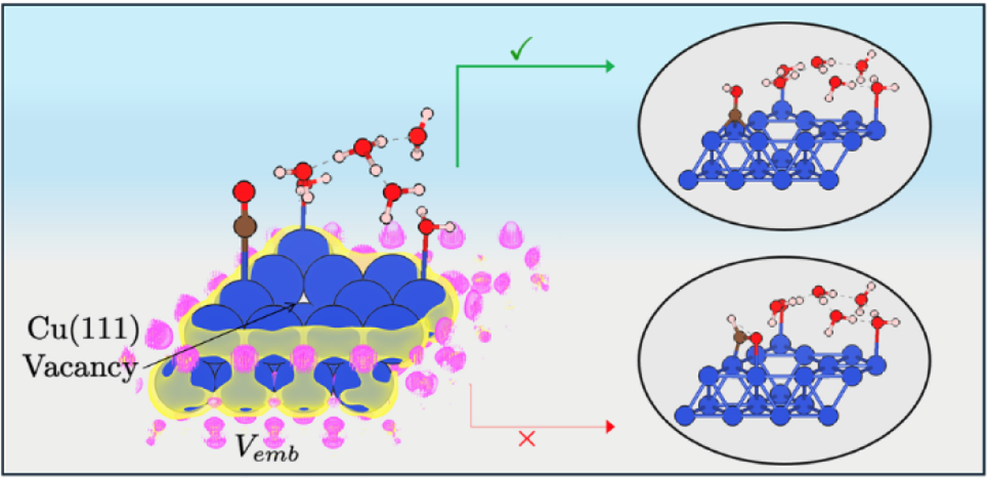
I study how local surface structure changes reaction pathways in electrocatalysis and photocatalysis. My work uses embedded correlated wavefunction theory to examine CO2 reduction at Cu surfaces, including the role of vacancies, and first-principles simulations to understand cooperative surface effects in photocatalytic water splitting.

DFETembedded correlated wavefunctionCO2 reductiondefectswater splitting
Graphical abstract showing an embedded Cu(111) surface vacancy and competing electrochemical CO reduction pathways.
Surface vacancies and competing CO reduction pathways. TOC graphic from V. Sharma, J. M. P. Martirez, and E. A. Carter, Journal of Physical Chemistry C (2026). CC BY 4.0.
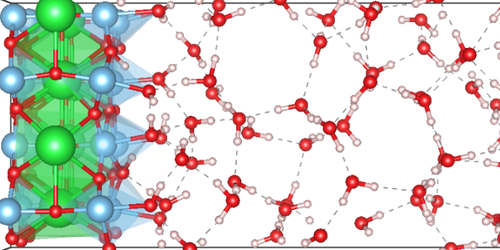
Atomistic model of a strontium titanate surface in contact with water molecules.
SrTiO3–water interface. V. Sharma et al., PRX Energy (2022); image featured in APS Physics.

Extreme conditions

Electronic Structure Methods for Extreme Conditions Physics

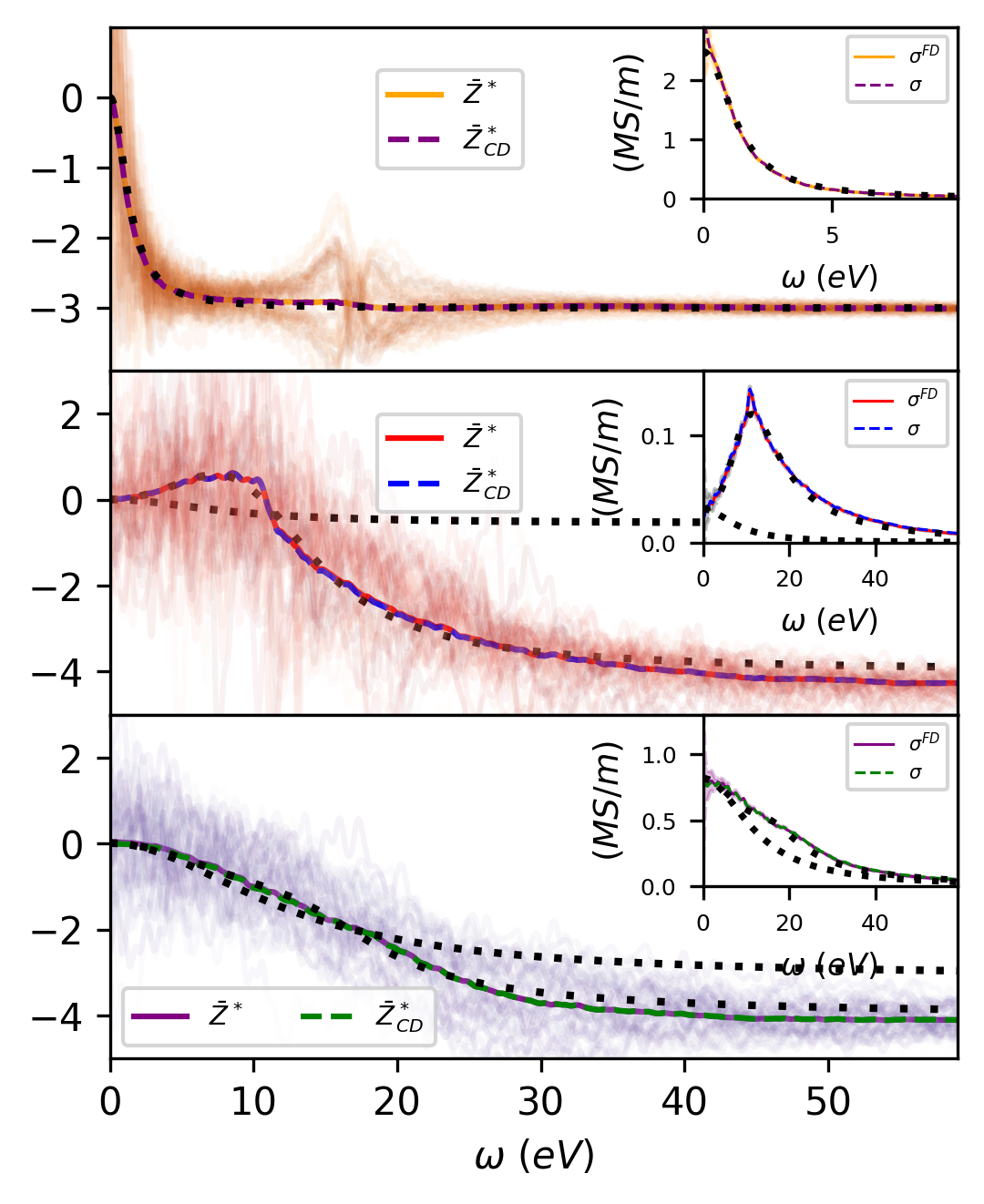
I develop stochastic and mixed stochastic-deterministic DFT methods for electronic structure and transport in disordered metals, warm dense matter, and hot dense plasmas. This work includes implementations in the projector augmented-wave formalism, Kubo–Greenwood conductivity decompositions, and group conductivity and nonadiabatic Born effective charges that resolve electronic response by atom or chemical species.

stochastic DFTmixed DFTKubo–Greenwoodgroup conductivityBorn effective chargesWDM
Nonadiabatic Born effective charge spectra and conductivity insets for warm dense aluminium and carbon, with individual atomic contributions shown as shaded curves.
Atom-resolved response in warm dense aluminium and carbon. V. Sharma and A. J. White, Physical Review Letters (2025), Fig. 2. CC BY 4.0.

Condensed-phase chemistry

Water and Solvation

I investigate how solvation and local coordination influence ion pairing and charge transfer. My recent work combines multilevel embedded correlated wavefunction theory with ab initio molecular dynamics to study metal–bicarbonate ion pairs in alkaline aqueous solutions. Earlier work used real-time TDDFT to examine coupled electron–nuclear dynamics and proton transfer in ionized water chains.

DFETembedded correlated wavefunctionmultilevel embeddingion pairingAIMDrt-TDDFT
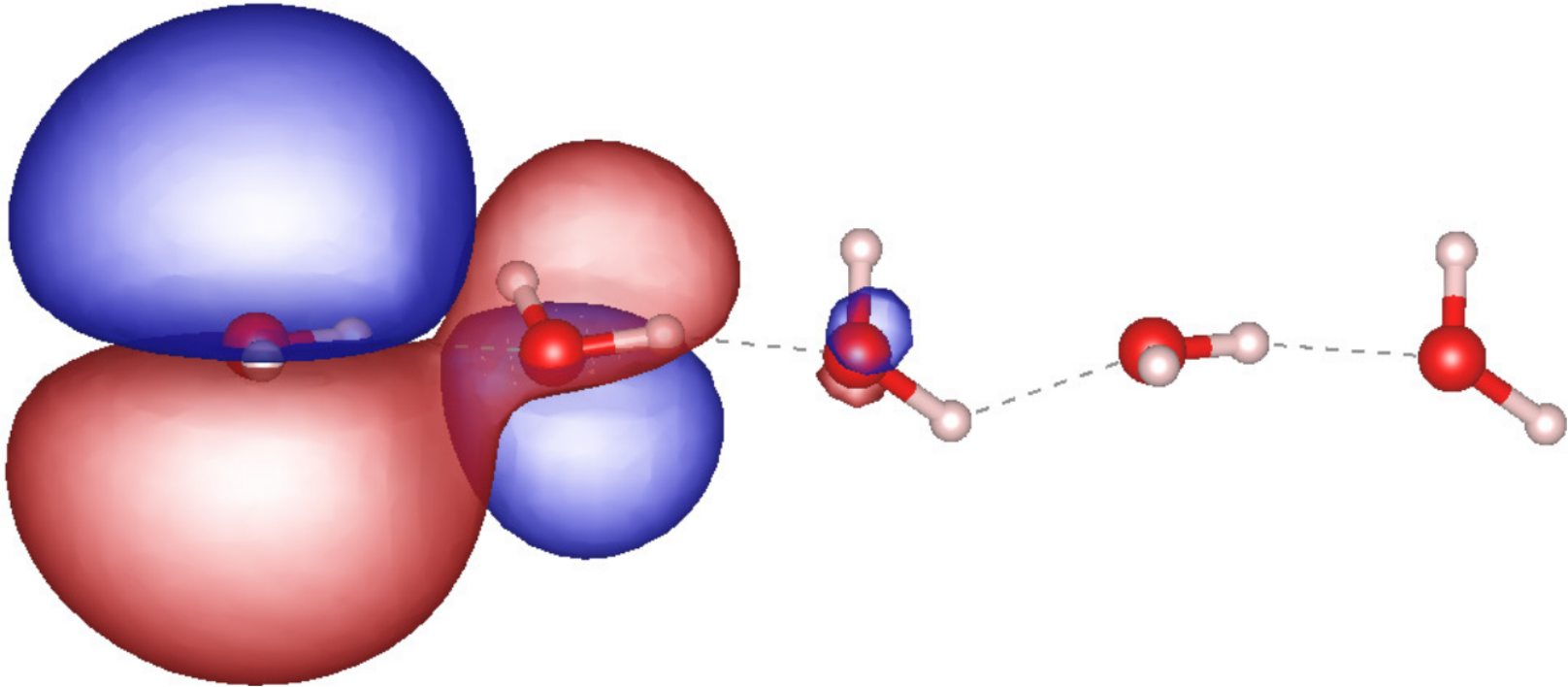
Five hydrogen-bonded water molecules with the highest occupied molecular orbital shown as red and blue isosurfaces.
Water-chain geometry and HOMO isosurface from earlier proton-transfer work. V. Sharma and M. Fernández-Serra, Physical Review Research (2020), Fig. 6(a).

All publications →

Methods

Across these projects, I combine correlated electronic-structure calculations with ab initio molecular dynamics to sample atomic configurations, and DFT and time-dependent DFT to connect electronic structure with charge transfer, optical response, and transport.